

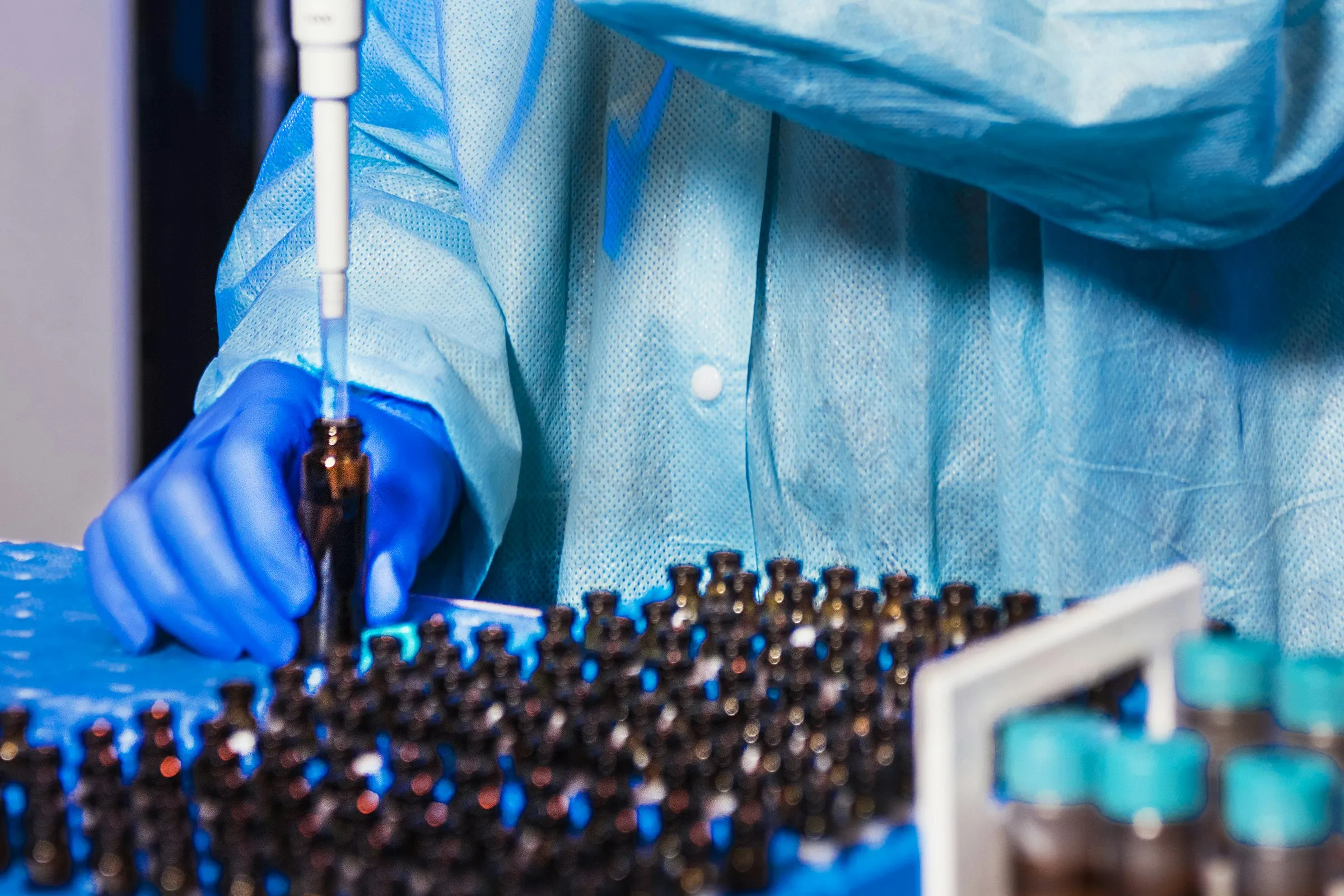
The Stanford Institutes of Medicine Summer Research Program (SIMR) is an eight-week summer program where high school juniors and seniors do hands-on medical research in a Stanford lab, mentored by Stanford graduate students and postdoctoral fellows. It's free to attend, takes around 50 students, and the application for summer 2027 opens December 18, 2026. Selection heavily favors students from the Bay Area, so this guide covers who can apply, how the application works, and what the summer looks like, followed by 9 alternatives: medical research and health care opportunities for high school students, both nationwide and in the Bay Area.
Topics We Cover:
- What Is Stanford SIMR?
- SIMR 2027 Dates and Deadlines
- Who Can Apply to SIMR?
- How Much Does SIMR Cost?
- How to Apply to SIMR
- What a Summer at SIMR Looks Like
- 9 Alternatives to Stanford SIMR
- Frequently Asked Questions
What Is Stanford SIMR?
SIMR is run by Stanford Medicine. It began with a gift from a local family, held its first summer in 2000 with 10 high school juniors and seniors, and took the name SIMR in 2008 when it partnered with several Stanford institutes. Its goal is to grow students' interest in the biological sciences and medicine and to show them how scientific research is actually done. SIMR is also listed on StandOutSearch, where its dates are updated as Stanford posts them.
Students work on a medically oriented research project in one of eight areas:
- Immunology
- Neurobiology
- Cancer biology
- Bioengineering
- Stem cell and regenerative medicine
- Cardiovascular biology
- Bioinformatics
- Genetics and genomics
SIMR also offers a Bioengineering Team Internship, a separate track without lab placements. In 2026 it met three days a week (Monday, Wednesday, and Friday), and teams of four to five students designed, built, and tested a prototype for a medical need.
SIMR 2027 Dates and Deadlines
- Applications open: December 18, 2026, at 5 p.m. Pacific
- Applications due: late February 2027 (Stanford hasn't posted the exact date yet; in 2026 it was February 21)
- Decisions: not yet announced for 2027 (in 2026, decisions were emailed April 10)
- Program dates: June 7 to July 29, 2027 (tentative). Students must be able to start on the first day.
Who Can Apply to SIMR?
To apply for summer 2027, students must meet all three of SIMR's requirements, and Stanford makes no exceptions:
- Grade: be a junior or senior as of fall 2026 (the class of 2027 or 2028).
- Age: be at least 16 by the program's start date in June 2027.
- Residency: live in the U.S., attend a U.S. high school, and be a U.S. citizen or permanent resident (green card holder).
Anyone who meets these rules can apply, but Stanford says selection will heavily favor local Bay Area students because of the program's grant requirements. Students from outside the area must name a family member they will live with during the program; hotels and Airbnbs aren't allowed. International students aren't eligible.
How Much Does SIMR Cost?
There is no cost to take part if you're selected. The application fee was $50 for summer 2026, and it is waived for households earning under $80,000 a year or facing circumstances that make the fee hard to pay. Stipends generally aren't provided, though a very limited number of need-based stipends come from a special grant.
SIMR doesn't provide housing or transportation. All participants live with a family member or legal guardian and commute to campus.
How to Apply to SIMR
Students apply online through SlideRoom, linked from the SIMR application page. For 2026, the application included:
- the online application, in which you rank the research institutes you're most interested in;
- one recommendation letter from a teacher (letters had a one-week grace period after the deadline, and students were responsible for confirming theirs arrived);
- the $50 fee or a fee waiver request.
Applications can't be edited after you submit them, so Stanford advises submitting early. Accepted students then receive a list of host faculty and their research topics and rank them again. Stanford asks applicants not to contact faculty themselves about lab placement. Check the official SIMR page after December 18 for the 2027 requirements.
What a Summer at SIMR Looks Like
- Week 1: orientation and required safety training on the first morning.
- Weeks 1–2: morning lectures several times a week, with afternoons in the lab.
- Most of the summer: full-time lab work, about 40 hours a week, Monday through Friday, with no evening or weekend hours.
- Weeks 7–8: preparing a research poster.
- Last day: an evening poster session on campus, where students present to family, teachers, and the Stanford community.
Day-to-day mentors are graduate students or postdoctoral fellows in a Stanford faculty member's lab. Students must attend all eight weeks.
9 Alternatives to Stanford SIMR
SIMR takes around 50 students, mostly from the Bay Area, so it's worth applying to several programs. The opportunities below include national programs open to students from other states, Bay Area programs on similar timelines, and StandOut Connect, which you can do from anywhere. Find more on StandOutSearch, the largest free database of high school internships, or in our guides to Bay Area internships and medical internships.
1. StandOut Connect
Ages: 15-19
Location: Virtual
Timeline: Summer, Spring, Fall, or Winter
Deadline: November 23, 2026 (Winter cohort)
StandOut Connect is a program that helps match gifted high school students with online internships in their industry of interest. Students match with companies across 25 interest areas such as finance, STEM, medicine, law, arts, and more. Examples of past matches relating to medicine include biotech startups developing therapies for Alzheimer's and other neurodegenerative diseases, a company building an ultrasound treatment for dangerous blood clots, and a company making drug development faster and cheaper. StandOut Connect is funded by StandOutSearch, the largest free database for high school internships. The program has been featured in Forbes and was created with the help of investment from The University of Chicago's Polsky Center for Entrepreneurship and Innovation.
2. NIH Summer Internship Program (SIP)
Ages: 17-18 (graduating seniors)
Location: Bethesda, MD, and other NIH campuses
Timeline: Summer 2027
Deadline: January 26, 2027
The National Institutes of Health accepts graduating high school seniors into its summer research internship, where interns join an NIH lab for biomedical, behavioral, or social science research, between May 10 and August 31, 2027. Applicants must be U.S. citizens or permanent residents and 18 by September 30, 2027; seniors who are still 17 on June 1, 2027, must live within 40 miles of an NIH campus. Interns receive a stipend but find their own housing. Because each lab picks its own interns, NIH encourages applicants to email researchers directly.
3. Rockefeller University Summer Science Research Program (SSRP)
Ages: Juniors and Seniors, 16+
Location: New York, NY
Timeline: June 21 to August 5, 2027
Deadline: January 4, 2027
At Rockefeller University's SSRP, 32 to 40 high school juniors and seniors split into research teams, each guided by working scientists. Teams choose their own research question, run experiments, analyze their data, and present a poster at a closing symposium, about 35 hours a week for seven weeks. All materials, including the recommendation letter, are due January 4, 2027.
4. Scripps Research Student Research Internship Program
Ages: 16+
Location: La Jolla, CA
Timeline: June 1 or June 14 to August 6, 2027
Deadline: March 30, 2027
The Scripps Research Translational Institute in San Diego runs a summer internship of up to 10 weeks in translational science, focused on genomics and mobile health. Interns learn how genetics shapes common diseases, how genomic studies and digital health trials are designed, and how clinical trials are run. The institute says funding for 2027 hasn't been decided yet, and it doesn't provide housing. Applications open November 23, 2026.
5. Pediatrics Internship Program at Stanford (PIPS)
Ages: Rising juniors and seniors, 16+
Location: Stanford, CA
Timeline: June 7 to July 23, 2027
Deadline: Not yet announced
PIPS is a seven-week research internship in Stanford Medicine's Department of Pediatrics, designed for students with little or no research experience. Interns complete a research project focused on maternal and child health and pediatrics, working 30 hours a week alongside Stanford faculty, postdoctoral fellows, and researchers, with near-peer mentoring sessions throughout. Applicants must live and attend high school in San Francisco, San Mateo, Santa Clara, Marin, Alameda, Contra Costa, or Santa Cruz County and have an unweighted GPA of at least 3.0. The program is free, need-based stipends of $3,000 are available, and Stanford expects 35 to 40 interns for summer 2027.
6. Stanford Medical Youth Science Program (SMYSP)
Ages: Juniors
Location: Stanford, CA
Timeline: June 21 to July 23, 2027
Deadline: Not yet announced (March 23 in 2026)
SMYSP is a free, five-week science and medicine program for low-income, first-generation high school juniors in Northern California. Students take internships across Stanford Hospital, research a health disparity in small groups, and attend lectures on public health, research methods, and anatomy taught by Stanford medical students, along with weekly college-planning workshops. The 2027 cohort will be 24 students.
7. UCSF Summer Student Research Program
Ages: 16+
Location: San Francisco, CA
Timeline: Summer (7 weeks)
Deadline: February 12, 2027
This UCSF program pairs students one-on-one with health care providers and researchers for a summer research project, with workshops, simulations, and a closing research symposium where each student presents their findings. It is open to high school sophomores, juniors, and seniors who are 16 by June 1 and have completed a year of math and biology, and who are economically, educationally, or medically disadvantaged. High school students receive a stipend of about $3,000.
8. UCSF SEP High School Intern Program
Ages: Juniors
Location: San Francisco, CA
Timeline: June 7 to July 30, 2027
Deadline: Not yet announced (February 8 in 2026)
UCSF's Science and Health Education Partnership places 25 high school juniors in UCSF labs for eight weeks, 35 hours a week, each working on their own research project with a scientist mentor. Interns who complete the program earn a $4,500 stipend. The program is open only to juniors at San Francisco Unified School District high schools or San Francisco public charter schools.
9. KP LAUNCH High School Program
Ages: 16+
Location: Northern California
Timeline: June 14 to July 30, 2027
Deadline: January 8, 2027
Kaiser Permanente's KP LAUNCH program gives Northern California high school students a seven-week, full-time summer job on the administrative and support side of health care, at the Kaiser Permanente medical center or office closest to home. Interns earn $25 an hour and build professional skills while learning about careers in the health professions. Applicants must be at least 16 by June 1, 2027, and live in a Northern California Kaiser Permanente service area. Applications open November 16, 2026.
Frequently Asked Questions
How hard is it to get into Stanford SIMR?
Very competitive. SIMR takes around 50 students a year and doesn't publish how many apply, so any acceptance rate you see online is an estimate. Stanford says selection heavily favors local Bay Area students, so applicants from elsewhere face the longest odds.
Does SIMR pay a stipend?
Generally no. Stanford says stipends aren't provided to most students, but a very limited number of need-based stipends come from a special grant.
Does SIMR provide housing?
No. SIMR is a commuter program, and every participant must live with a family member or legal guardian. Students from outside the Bay Area must stay with a relative; hotels and Airbnbs aren't allowed.
Can international students apply to SIMR?
No. Applicants must live in the U.S., attend a U.S. high school, and be U.S. citizens or permanent residents.
When does the SIMR 2027 application open?
December 18, 2026, at 5 p.m. Pacific. Applications are due in late February 2027.